
How AGMA, CTI and ISO guidance help specify reliable severe-duty drives for industrial process cooling
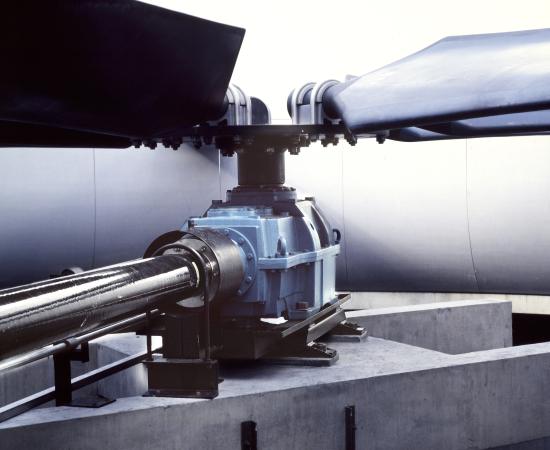
Cooling towers are central to process cooling in power generation, chemical processing, metals, water infrastructure and other heat-intensive operations. Their fan drives operate in difficult conditions, often high above grade, exposed to moisture, heat, vibration and limited maintenance access. At the center of that mechanical system is the gear speed reducer.
A gearbox selection cannot be reduced to horsepower, ratio and a catalog service factor. Long-term performance depends on how the reducer, fan, motor, support structure, lubrication system and maintenance plan work together. Industry standards provide engineering baselines. The most reliable installations use that baseline to make disciplined application-specific decisions.
Why a Gearbox Standards Framework Matters
Standards are the starting point for evaluating the mechanical integrity of a cooling tower gearbox. They establish recognized methods for rating gear teeth, sizing shafts, evaluating bearings, selecting lubrication and testing the completed drive. Those common methods give owners, OEMs, consultants and gearbox manufacturers a shared technical language.
That foundation matters because cooling tower service is rarely gentle. Many units operate for long annual hours. Fan loads can fluctuate with wind, seasonal temperature changes and operating demand. The equipment may see repeated starts and stops, thermal cycling, corrosive airborne contaminants and water exposure. When a drive failure stops a process-critical fan, the consequence can extend well beyond the gearbox repair itself.
For that reason, minimum compliance is not the same as lifecycle reliability. A robust specification treats standards as the floor, then applies additional design margin, environmental protection and maintenance access based on the realities of the site.
The central design question is does the drive only meet a published rating, or is it designed for the actual fan inertia, structural behavior, exposure, starting profile and maintenance practices of this tower? The second question is the one protecting uptime.
The Standards Shaping Cooling Tower Gearbox Design
No single document covers every aspect of an industrial cooling tower drive. The specification usually combines gear-rating standards, enclosed-drive component standards, cooling-tower guidance and vibration standards. Together, they create a disciplined framework for evaluating a complete drive system.
| Standard Family | Primary Focus | Cooling Tower Implication |
|---|---|---|
| ANSI/AGMA 2001/2101 and 2003 | Gear tooth bending strength, surface durability and load factors | Establishes the core gear-rating method for helical and bevel stages. |
| ANSI/AGMA 6001/6101 | Shafts, keys, fasteners, housings, bearings and supporting components | Helps evaluate load paths, stiffness and components beyond the gear mesh |
| ANSI/AGMA 6013/6113 | General industrial enclosed gear-drive design and service classifications | Provides the system-level reference point for an enclosed gear drive |
| ANSI/AGMA 9005 | Lubricant selection and lubrication practice | Supports oil selection, water management and maintainability |
| CTI STD-111 and STD-167 | Cooling-tower and air-cooled-condenser gear speed reducer guidance | Addresses fan-drive service, vertical arrangements and severe operating environments |
| CTI STD-163; ISO 20816; ISO 14694 | System and machine vibration evaluation | Supports baseline acceptance testing and investigation of operating vibration |
| CTI ESG-138 | Long-term cooling tower storage guidance | Helps plan protection for seasonal shutdowns and extended idle periods |
Table 1. Standards commonly referenced during the design and specification of industrial cooling tower fan drives. Confirm the current edition and contract applicability for each project.
Start with the Mechanical Rating
The ANSI/AGMA gear-rating standards provide the underlying method for evaluating the gear teeth transmitting fan torque. The core calculations consider bending fatigue strength, surface durability or pitting resistance, load distribution and other factors influencing gear life. In a cooling tower drive, these calculations should reflect more than a stable nameplate load.
Startup torque, fan inertia, changing aerodynamic loads, temperature and the expected condition of the lubricant over time can all influence the real duty imposed on the gearset. A conservative design process considers these variables early, rather than assuming ideal operating conditions throughout the service life of the unit.
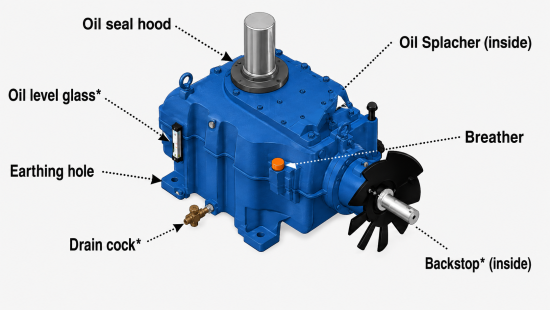
The component standards for enclosed gear drives extend the discussion beyond the teeth. Shafts, keys, fasteners, bearings, housing rigidity, oil seals, breathers and monitoring provisions each shape reliability. A technically sound gearset can still perform poorly when shaft deflection, housing movement, inadequate bearing support or compromised sealing changes the alignment and lubrication conditions around it.
ANSI/AGMA 6013/6113 brings those elements together as a system-level industrial gear-drive framework. It also provides application service classifications. For large industrial cooling tower fan drives, the application must be reviewed carefully because generic fan categories may not capture the inertia, duty cycle, environmental exposure or maintenance limitations of a severe-duty tower.
Service Factor Is a Starting Point, Not the Final Answer
A service factor is useful because it creates a consistent way to account for application severity. It’s not a substitute for a complete system review. In cooling tower service, the motor rating, fan inertia, start and stop frequency, aerodynamic load, tower stiffness and operating schedule all affect the loading a gearbox must tolerate.
CTI guidance is especially important here because it focuses on the cooling tower environment. The draft framework for industrial water cooling tower gear reducers calls for a minimum 2.0 service factor relative to motor power. That target is more conservative than many general industrial fan assumptions and recognizes the long operating hours and high consequence of failure in large tower installations.
The key is to document the actual duty. The project team should define motor power, reduction ratio, fan diameter, fan inertia, belt or direct-drive arrangement, fan radial and thrust loads, frequency of starts, operating speed range, wind exposure, structural mounting details and maintenance expectations. A gearbox supplier can only design for the loads identified.
A useful specification principle is to specify the system inputs creating load, not only the gearbox output requirements. The supplier needs the fan inertia, thrust and radial loads, structure details and operating profile to evaluate the complete drivetrain.
CTI Guidance Brings the Tower Environment into Focus
Cooling towers create an environment different from most catalog gear drive applications. The reducer may be mounted vertically. It may be exposed to humid air, water droplets, biological contaminants, direct sunlight and seasonal temperature swings. The fan can impose substantial radial and thrust loads. Access may be constrained by elevation and cooling tower geometry.
CTI STD-111 for industrial water cooling towers and CTI STD-167 for air-cooled condensers translate those environmental and mechanical realities into guidance for gear speed reducers. The intent is clear: The drive should be purpose-designed for the application. A multi-purpose reducer fitting the speed and torque on paper may not provide the bearing arrangement, lubrication control, sealing performance or structural robustness needed for a large fan application.
Vertical operation deserves specific attention. Gear and bearing lubrication must reach all critical elements despite orientation. Bearings above the oil sump may need a deliberate lubrication method. Seals must perform under shaft movement, weather exposure and possible pressure changes within the housing. Breathers must limit moisture ingress while allowing the gearbox to equalize pressure as temperature changes.
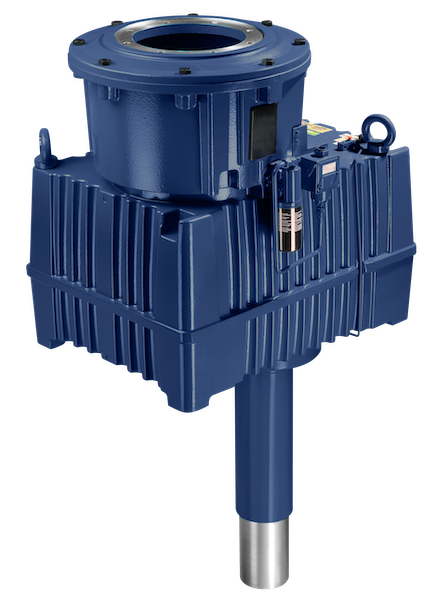
An air-cooled condenser drive.
Lubrication and Sealing Are Reliability Systems
Lubrication is not a maintenance afterthought; it is part of the gearbox design. ANSI/AGMA 9005 provides guidance on industrial gear lubricant selection and practice. For cooling tower service, the lubricant must also support real environmental conditions, including high operating temperatures, water exposure, long drain intervals and the possibility of extended idle periods.
Oil with strong water-separation performance can help operators identify and remove contamination before it degrades the lubricant film. Oxidation resistance supports long service intervals in elevated-temperature service. A sump heater can improve low-temperature startup behavior and may help support a practical year-round viscosity strategy, depending on the operating conditions and manufacturer recommendations.
The best lubrication strategy also makes good maintenance easier. Sight glasses, accessible fill and drain points, sampling ports, filtration provisions and clear inspection practices are not convenience features. They reduce the chance a difficult access condition becomes a missed maintenance task. In a tower where access is limited, monitoring and maintainability should be designed into the drive.
Vibration Must Be Evaluated as a System
CTI STD-163 establishes vibration limits and measurement practices for new water cooling towers. It addresses measurement locations, methods and acceptable mechanical vibration levels for the cooling tower system. It’s valuable as a new cooling tower baseline and as a reference point when troubleshooting vibration in operating equipment.
The vibration question does not end with the gearbox. A tower can transmit vibration into the drive through the structure. Fan imbalance, misalignment, mounting deflection, resonant conditions and aerodynamic instability can add loads that aren’t visible in a simple gear-rating calculation. ISO 20816 focuses on vibration produced by the machine itself, while ISO 14694 provides industrial fan-related vibration guidance. These documents are useful, but they do not replace a full review of torsional behavior in a high-inertia fan system.
When cooling towers use variable-frequency drives (VFDs), the review should include the full intended speed range. VFDs can reduce electrical and mechanical stress through controlled acceleration. They can also help match fan speed to cooling demand. However, the operating range must avoid structural or drivetrain resonances, and the gearbox must be evaluated for the actual speed and torque conditions it will see.
Design for the Difference Between a Rating and Real Operation
The central weakness in a lowest-first-cost selection is it often assumes the field will behave like the calculation. In practice, cooling tower structures flex. Fans start and stop. Oil becomes contaminated. Maintenance windows narrow. A seal working in a clean indoor test environment may be challenged by moisture, heat, vibration and shaft movement on top of a tower.
A resilient cooling tower gearbox specification acknowledges those conditions. It requires a rigid housing and load path to support gear alignment. It accounts for fan radial and thrust loads at the bearing arrangement. It specifies a sealing and breather approach appropriate for the orientation and exposure. It confirms lubrication of all bearings and gear meshes. It identifies the vibration acceptance plan and the maintenance access required after startup.
The result may increase first cost. It can also lower total cost of ownership by reducing unexpected downtime, repair scope, oil-change difficulty and premature component wear. The decision should be made at the system level, not by comparing gearbox purchase price alone.
Common Failure Drivers and What to Do About Them
Gearbox failures usually develop from several manageable conditions rather than one dramatic design mistake. The following matrix can help teams connect common failure drivers with early symptoms, monitoring tools and preventive actions.
|
Failure Driver |
Likely Symptoms |
Monitoring Method |
Preventive Action |
|
|---|---|---|---|---|
|
Water ingress |
Milky oil, corrosion, rising bearing or gear wear |
Oil analysis, visual inspection, moisture checks |
Use suitable seals and breather; inspect regularly; correct leakage paths |
|
|
Contamination |
Abrasive wear, elevated temperatures, reduced lubricant life |
Oil analysis, particle counts, filter inspection |
Use clean fill practices, filtration and planned oil sampling |
|
|
Misalignment or structural deflection |
Uneven wear, vibration, leakage, bearing distress |
Vibration trend data, alignment checks, structural inspection |
Verify mounting stiffness, load paths and coupling/fan alignment |
|
|
Heat |
Oil oxidation, elevated temperature, seal hardening, reduced life |
Temperature trends, oil condition, infrared checks |
Confirm thermal capacity, ventilation, lubricant and oil level |
|
|
Starts, stops and unstable fan loading |
Shock loading, cyclic stress, torsional effects, damage over time |
Review operating data, VFD parameters and vibration trends |
Document fan inertia; use controlled starts; avoid resonant speeds |
|
|
Poor access or deferred maintenance |
Missed inspections, low oil level, late failure detection |
Maintenance records, inspection routes, remote condition data |
Design accessible service points and clear preventive-maintenance tasks |
|
Table 2. Common failure drivers are interconnected and should be addressed in both the initial specification and the maintenance plan.
A Practical Specification Checklist
A cooling tower gearbox specification should make responsibilities clear. It should identify which party provides the fan data, who confirms the support structure, who selects the lubricant, how vibration acceptance will be measured and who owns the ongoing inspection program. The following items form a practical baseline for the specification discussion.
- Gear rating: Require an AGMA-compliant rating method appropriate for the gear configuration and documented design duty.
- Service factor and duty: Identify the required service factor, motor power, fan inertia, starts and stops, operating hours, speed range and VFD use.
- Loads and structure: Provide fan radial and thrust loads, mounting arrangement, support stiffness information and expected alignment conditions.
- Bearings and shafts: Require bearing life and shaft/housing stress evaluation for actual fan loads, not only nominal torque.
- Lubrication: Define oil type or approved lubricant family, low-temperature strategy, water-management provisions, sampling access and drain/fill accessibility.
- Sealing and breathers: Specify protection appropriate for vertical orientation, humid service, contamination exposure and pressure changes.
- Thermal performance: Confirm the gearbox can reject heat at the expected ambient and operating conditions.
- Vibration and commissioning: Define baseline measurement locations, acceptance criteria and trend monitoring expectations.
- Storage and shutdown: Require a preservation plan for seasonal layup, extended outage and long-term storage.
- Maintenance access: Verify guards, lifting points, inspection access and safe work practices before the tower is commissioned.
Building Reliability into the Specification
Cooling tower gearboxes operate at the intersection of mechanical design, environmental exposure and plant reliability. AGMA/MPMA, CTI and ISO guidance provide the standards framework. The strongest results come from using that framework to describe the real application with enough detail for the gearbox supplier to design and validate the full drive.
A reliable solution uses conservative mechanical design, purpose-built bearing and lubrication arrangements, robust sealing, practical inspection access and condition monitoring. It also recognizes that tower vibration, fan inertia, support structure behavior and maintenance practices can determine gearbox life as much as the published rating.
For owners, consultants and OEMs, the goal is straightforward: Specify the system for the life it must deliver, not only the load it must carry on day one.
Reference Standards and GuidanceThis list summarizes the standard families cited in this article. Teams should confirm current editions, project applicability and contractual requirements before finalizing a specification. ANSI/AGMA 2001/2101: Involute spur and helical gear tooth rating methods. ANSI/AGMA 2003: Bevel gear rating methods. ANSI/AGMA 6001/6101: Design and selection of components for enclosed gear drives. ANSI/AGMA 6013/6113: Industrial enclosed gear-drive design and application guidance. ANSI/AGMA 9005: Industrial gear lubrication guidance. Cooling Technology Institute (CTI) STD-111: Gear speed reducers for industrial water cooling towers. Cooling Technology Institute (CTI) STD-167: Gear speed reducers for air-cooled condensers. Cooling Technology Institute (CTI) STD-163: Vibration limits in water cooling towers. Cooling Technology Institute (CTI) ESG-138: Long-term storage procedures for cooling towers. ISO 20816: Mechanical vibration evaluation. ISO 14694: Industrial fan vibration and balance guidance. |
About the Author

Daniel Rosseljong is Senior Product Manager at Sumitomo Drive Technologies, Sumitomo Machinery Corporation of America. He supports the application and development of industrial gear-drive solutions for demanding process and power-transmission applications.
About Sumitomo Machinery Corporation of America
Sumitomo Machinery Corporation of America operates throughout the Western Hemisphere under the global brand Sumitomo Drive Technologies. The organization supplies industrial power transmission and motion-control equipment to customers across North, Central and South America. Its work supports manufacturing, material handling, water treatment, mining, food processing, logistics, energy, metals and other industrial sectors.
To read articles on Cooling Towers, visit https://coolingbestpractices.com/technology/cooling-towers.
For expert presentations, visit our Webinar Archive Section dedicated to Cooling Towers at https://coolingbestpractices.com/magazine/webinars.
