Fluid Coolers

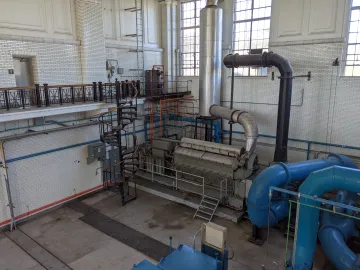
A Midwest water utility replaced once-through engine cooling with closed-loop fluid cooler systems to eliminate nearly one million gallons of annual potable water consumption while improving operational reliability. This case study examines the engineering evaluation process, fluid cooler selection, pump skid design, piping optimization, glycol-based heat transfer, variable-frequency drive controls and lessons learned during commissioning. The project demonstrates how closed-loop cooling systems can reduce water use, enhance redundancy and provide a sustainable alternative for industrial engine cooling applications.

The 2026 Cooling Technology Institute Annual Conference

This article shares updates to CTI standards and acceptance test codes, synopsizes the event’s educational curriculum, shares perspectives and highlights firms attending this year’s annual conference for manufacturers, owner-operators and suppliers of heat rejection equipment.

Fluid Equipment Solutions Saves Energy and Water with Dry, Hybrid and Adiabatic Cooling

The selection criteria for the hybrid fluid cooler considered year-round temperatures. Summer duty had an entering water temperature of 95°F (35°C) and a leaving water temperature of 85°F (29°C). In winter, the wireless provider could use the fluid cooler for direct free cooling, meaning it could send water directly through the fluid cooler, bypassing the chiller. Entering water temperature was 55°F (13°C) and leaving water temperature was 44°F (7°C).

Evaluating Process Cooling Supply Temperatures

This article will make plants aware of the energy and water use differential between CHW systems providing chilled water in a 45-60°F (7-16°C) range, and process cooling solutions at 70°F up to 120°F (21 to 49°C). The article will examine cooling resource evaluation criteria and supply water temperature specifications, then describe and compare process cooling options.

EVAPCO’s Journey to Dry and Hybrid Cooling Technologies

Dry fluid coolers use ambient air to reject heat from hot process fluids running through the unit’s closed-circuit coil heat exchanger. Dry coolers have either flat or V-shaped configurations. Hybrid fluid coolers combine closed-loop dry cooling with evaporative cooling for an efficient design that uses less water. Hybrids can be run in dry mode when the temperature set point can be met by dry cooling alone. Adiabatic coolers are a type of dry cooler that use some water to pre-cool the ambient air used to reject heat from the process fluid. 

The 2024 Cooling Technology Institute Annual Conference

The 2024 Cooling Technology Institute (CTI) Annual Conference for manufacturers, owner-operators, and suppliers of heat rejection equipment (i.e., cooling towers, adiabatic coolers and dry coolers) was held Feb. 4 – 8 at the Westin Galleria in Houston, TX. This article will share some updates to CTI standards and acceptance test codes, synopsize the event’s educational curriculum, share perspective, and highlight products and services offered by a sampling of firms at the event’s trade show. 

The Paths to Leadership in Energy and Environmental Design Water Conservation Credits for Evaporative Cooling Towers

Water conservation is a high priority in designing and operating water-cooled equipment and plays an important role in USGBC’s Leadership in Energy and Environmental Design (LEED) certification and other sustainability programs. LEED assigns credit points to reduce water usage. 

The Six Basic Types of Liquid Cooling Systems

There are six basic types of cooling systems that you can choose from to meet the cooling needs of your load. Each one has its strengths and weaknesses. This article was written to identify the different types of cooling systems and identify their strengths and weaknesses so that you can make an informed choice based on your needs.

Calculating the Water Costs of Water-Cooled Air Compressors

Compressed air systems are present in almost all industrial processes and facilities. They have been correctly identified as an area of opportunity to reduce electrical (kW) energy costs through measures like reducing compressed air leaks and identifying artificial demand and inappropriate uses. Water-cooled air compressors can also be significant consumers of water and reducing these costs can represent a second area of opportunity.

Upgraded Cooling System at Paper Mill

This article reviews two major processes in paper mills: compressed air quality and air compressor cooling.  The central air compressor room was expanded and relocated at the largest privately owned paper mill in Canada.  The compressor space was required by a plant expansion, which would occupy the original compressor space for increased production.