Beverage

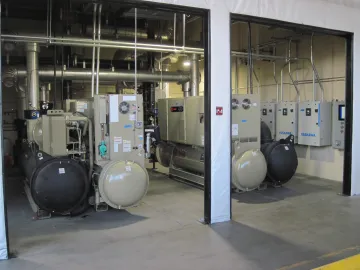
Faced with the requirement for improved cooling, a blow molding plant chose to invest in a significant redesign of its cooling systems that combined two separate systems into a single, integrated system. The combined design leveraged the components to provide a more controlled, efficient system while also requiring less space than the alternative would have needed. 

Twenty Years of Case Studies: Plants Sharing Best Practices

For 20 years, Chiller & Cooling Best Practices Magazine has published articles focused on helping manufacturers reduce power demand, lower water consumption, and improve the performance of compressed air, cooling, blower and industrial vacuum systems. In this article, we highlight a sampling of those stories across the following industries: Plastics and Packaging Food and Beverage Automotive and Transportation Cement, Building Materials, and Mining Metals, Pulp, and Paper Pharmaceuticals, Healthcare, and Research Wastewater Treatment

New Belgium Brewing’s Path to Low-GWP Refrigeration

This article examines how a natural refrigerant–based chiller was engineered to meet process cooling demands while minimizing environmental impact. It explores refrigerant selection tradeoffs, system architecture modifications required for flammable refrigerants and key design strategies such as charge reduction, mechanical isolation and safety controls. Engineers will gain practical insight into balancing efficiency, compliance and operational reliability in next-generation cooling systems.

Pro-Refrigeration Helps California Dairy with CO2 Chillers

With the approaching HFC phasedown, the demand for environmentally friendly cooling systems is driving chiller manufacturers to innovate. Washington-based Pro-Refrigeration, Inc., a leading manufacturer and supplier of chillers for the industrial and beverage processing market, including the dairy, beer and wine industries, recognized an opportunity with CO2 chillers. 

The State of Refrigerants in Commercial Chillers

Snail mail. Rolodexes. Boomboxes. We’ve given up the familiarity of the past for the promise of the future. But is the same happening in the chiller industry? Is the push for lower global warming potential (GWP) refrigerants changing the industry as we know it? In some ways, yes. But, in the United States in particular, the change may be more gradual than it appears at first glance.

Ensuring Reliable Process Cooling at Coppertail Brewing Co.

One of the biggest challenges brewers such as Coppertail face is maintaining the dedication to their brand’s mission and their loyal following, while expanding their reach and growing market share. That challenge means not compromising on ingredients and utilizing the best equipment available for the fermenting, brightening and packaging of their product. But, for any growing business, reliability, uptime and power costs must be quantified in order to maximize margins to make the business viable.

Advancements in Free-Cooling Keep Breweries Cool Year-round

The craft brewing industry has exploded over the past several years. According to the Brewers Association, in 2012 there were 2,420 regional craft breweries, microbreweries and brewpubs in the U.S. By 2017 that number had nearly tripled to 6,266. The abundance of craft brewers has led to increased competition for market share among consumers, distributors and bars – leaving little to no room for error in the brewing process.

Dogfish Head Craft Brewery Solves Cooling System Problems

Understanding and emulating how an existing business achieved success is often one of the biggest advantages to new business start-ups. Dogfish Head Craft Brewery, one of the first large craft breweries in the United States, has become recognized as a leader in this burgeoning industry. New breweries look to Dogfish Head’s model for implementing ideas that work without experiencing the irksome (and often expensive) trial and error growing pains. 

Deschutes Brewery and Holladay Park Plaza Save with the Energy Trust of Oregon

Since 2002, Energy Trust of Oregon have saved and generated 728 average megawatts of electricity and 52 million annual therms of natural gas. This is enough energy to power Multnomah and Washington counties while heating Deschutes County homes. ETO has saved enough energy equal to the output of a power plant and reduced reliance on fossil fuels. In total, they have invested $1.5 billion to save customers more than $6.9 billion on their energy bills over time.

Designing a Dedicated Modern Wine Cooling Systems

The temperature of wine must be kept stable throughout its production and storage in order to ensure final product quality that is acceptable for distribution and sale, and so cooling systems are an integral component of wine production. In wineries, the entire harvest can be destroyed by a temperature fluctuation during processing or storage, leading to catastrophic consequences for wineries.

Free-Cooling Motivair Screw Chiller Cools a Craft Brewer

It’s no secret the craft beer market has grown dramatically in North America.  Local breweries and brewpubs are popping up across all regions of the United States as consumers seek unique, flavor-rich brews.  In fact, according to the Brewers Association, the trade association representing small and independent American craft brewers, in 2015 the number of operating breweries in the U.S. grew 15 percent, totaling 4,269 breweries – the most at any time in American history.  With more breweries than ever before, small and independent craft brewers now represent 12 percent market share of the overall beer industry.

Chillers Provide Temperature Regulation For Fine Wine

Temperature control of the musts during the fermentation process is required for the production of high quality wines. Alcoholic fermentation is the chemical reaction in which yeast is used to transform the natural sugars of the fruit into alcohol. The heat generated by this exothermic reaction has to be managed. If must temperatures are allowed to reach the 85°F to 105°F range the reaction will be stopped. This results in high sugar content and an unstable product that requires the addition of sulphur dioxide (SO2) to allow it to be stored without spoiling. In general, optimal fermentation temperatures are 65°F - 68°F for white wines and 77°F for red wines.