Industries

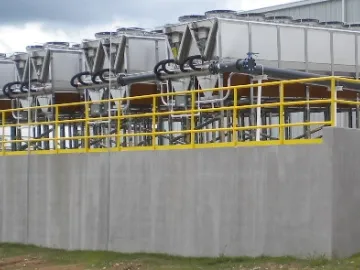
Adiabatic coolers are rapidly gaining ground in plastics processing as manufacturers seek sustainable, energy-efficient alternatives to traditional cooling towers. By operating in dry, adiabatic and free-cooling modes, modern systems engineered by Frigel North America deliver up to 90% water savings, lower energy consumption and improved temperature stability for injection molding, PET, extrusion and thermoforming applications. With reduced maintenance, closed-loop protection and long-term ROI advantages, adiabatic cooling is emerging as the new benchmark for high-performance industrial process cooling.
Refrigerant Regulations Reshape Chiller Thermal Performance Engineering

The transition to low-GWP refrigerants is changing glycol chiller design, safety and compliance requirements. This article examines how A2L and R-290 refrigerants affect refrigerant charge, system architecture, leak detection, ventilation and performance validation, while highlighting key considerations under EPA, ASHRAE and ICC requirements.

Haartz Electrifies with Water Source Heat Pump

An automotive fabric products manufacturer, reduced natural gas consumption and carbon emissions by implementing a water source heat pump system that captures waste heat from process cooling operations and converts it into usable heating energy for a large makeup air unit. The project simultaneously lowers cooling demand on the facility’s chilled water plant, demonstrating how industrial manufacturers can leverage heat recovery and electrification technologies to improve energy efficiency and support decarbonization goals.

Twenty Years of Case Studies: Plants Sharing Best Practices

For 20 years, Chiller & Cooling Best Practices Magazine has published articles focused on helping manufacturers reduce power demand, lower water consumption, and improve the performance of compressed air, cooling, blower and industrial vacuum systems. In this article, we highlight a sampling of those stories across the following industries: Plastics and Packaging Food and Beverage Automotive and Transportation Cement, Building Materials, and Mining Metals, Pulp, and Paper Pharmaceuticals, Healthcare, and Research Wastewater Treatment

Schneider Electric Turns Waste into Efficiency

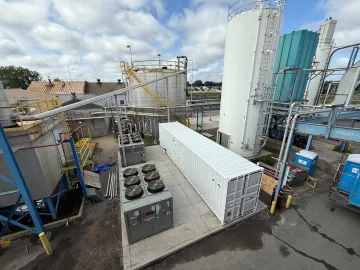
This article details how Schneider Electric transformed waste heat into a reliable energy source at its Lincoln, Nebraska facility. By repurposing low-temperature process cooling water and optimizing building pressurization and controls, the plant significantly reduced natural gas use, water consumption and CO2 emissions while improving indoor comfort and air quality. The project demonstrates how an efficiency-first approach—leveraging existing infrastructure, advanced controls and digital analytics—can deliver measurable sustainability gains and create a scalable pathway toward full electrification and net-zero operations.

New Belgium Brewing’s Path to Low-GWP Refrigeration

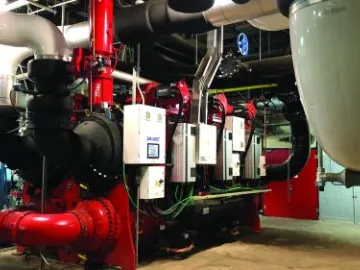
This article examines how a natural refrigerant–based chiller was engineered to meet process cooling demands while minimizing environmental impact. It explores refrigerant selection tradeoffs, system architecture modifications required for flammable refrigerants and key design strategies such as charge reduction, mechanical isolation and safety controls. Engineers will gain practical insight into balancing efficiency, compliance and operational reliability in next-generation cooling systems.

Adiabatic Coolers: An Evolution in Sustainable Process Cooling

Adiabatic coolers are rapidly gaining ground in plastics processing as manufacturers seek sustainable, energy-efficient alternatives to traditional cooling towers. By operating in dry, adiabatic and free-cooling modes, modern systems engineered by Frigel North America deliver up to 90% water savings, lower energy consumption and improved temperature stability for injection molding, PET, extrusion and thermoforming applications. With reduced maintenance, closed-loop protection and long-term ROI advantages, adiabatic cooling is emerging as the new benchmark for high-performance industrial process cooling.
Process Cooling Systems Engineers for Industrial Applications

In this article: Cooling for High-Speed Injection Plastic Molding Free Cooling Results in Massive Energy Savings Heat Treating Processes Require Cooling to Prevent Furnace Overheating Food Processing Cooling Needs Vary by the Specific Process Chemical Plants Need Ultra-Cold Conditions

CHS Refinery Repurposes City Wastewater for Cooling

The CHS oil refinery in McPherson, KS, is a 550-acre facility that processes 100,000 barrels of crude oil per day, consisting of an even mix of sweet crude oil and sour crude oil. Crude is brought in through pipelines and fractionated into gasoline, diesel and a few other products. The refinery also houses a sulfur plant where it produces a liquid agricultural fertilizer called ATS or ammonium thiosulfate, which uses sulfur removed primarily through a process called hydrotreating. 

Combined Design Does the Work of Two Cooling Systems at Bottling Plant

Faced with the requirement for improved cooling, a blow molding plant chose to invest in a significant redesign of its cooling systems that combined two separate systems into a single, integrated system. The combined design leveraged the components to provide a more controlled, efficient system while also requiring less space than the alternative would have needed. 

ETS Cools Extreme Temperatures at PTC Liberty Tubulars

The firm corrected issues with how its customer treated and recirculated its cooled water, adding chemical treatment equipment the plant could use in the future. Treating water is an important parts of maintaining a healthy cooling system. During the firm’s initial evaluation, it was evident the existing equipment had seen the effects of a lack of water treatment while the production line was not in use.

Midwest Machinery Replaces a Cooling Tower for Bayer Crop Science

Bayer Crop Science runs a 240-acre fertilizer production facility with areas for active ingredient and chemical intermediate production, as well as a high-active herbicide production unit. Among the multiple cooling towers at the facility was a 40-year-old field-erected, three-cell, wooden, crossflow Marley cooling tower used for rejecting heat and providing cooling for multiple processes. 

Chiller, Cooling Tower and Air Compressor Innovations at NPE2024

NPE2024: The Plastics Show took place in Orlando, Florida, May 2024, and Chiller & Cooling Best Practices Magazine and Compressed Air Best Practices® Magazine and were there to cover the highlights. This year’s conference drew over 50,000 registrants, including 15,000 from outside the United States. Filling both buildings of the Orlando Convention Center, the conference included zones dedicated to bottling, recycling and sustainability, material science, advanced manufacturing, mold-making and packaging. 

Replacing Field-Erected Towers with Modular

How do you replace aging cooling towers without risking disruption to a plant's continuous high-volume operation? That was the challenge at a major Midwest automotive manufacturing facility. In 1998, SUVs and minivans began rolling off the production line at the 4.5 million-square-foot facility (roughly 80 football fields under one roof), and the existing cooling towers were due to be replaced. 

HVAC/Process Cooling at Best Practices 2023 EXPO & Conference

In late October 2023, professionals from around the world gathered at the Best Practices 2023 EXPO & Conference at McCormick Place in Chicago, Illinois to source and learn about Sustainble, Safe and Reliable On-Site Utilities Powering Automation including chillers, cooling towers, motors, compressed air, blowers, vacuum, pneumatics and more.

Chiller Systems, Compressed Air and Nitrogen Generation at Fabtech 2023

FABTECH 2023, a leading event for metal forming, fabricating, welding, and finishing, successfully wrapped up its four-day run at Chicago's McCormick Place, achieving significant milestones for attendance, exhibitors, and show floor size. The 2023 show floor, spanning an impressive 825,325 square feet across three exhibit halls, featured an extensive showcase of over 1,500 world-class suppliers.

Cooling System Energy Savings in Three “Easy” Steps

An Illinois food service products manufacturer now saves nearly 60% of their base annual cooling energy costs through improvements made in three phases over several years. The plant, which has a 1200 ton chilled water plant, implemented upgrades including pump and tower fan VFDs and enhanced function controls, free cooling, and chiller compressor drive retrofits. The revisions built through successive phases to capture further benefits from more complete utilization of the preceding steps’ capabilities.

Sustainable Stellantis Energy Center Halves HVAC Chilled Water Energy Costs

The Sterling Heights facility, producing jet engines for the U.S. Army, has undergone extensive overhauls and re-tooling in the last decade. In 2010, Stellantis announced it would invest nearly $850 million in a new state-of-the-art paint shop at the SHAP Site, as well as the installation of new machinery, tooling and material-handling equipment. The following year, the company added another $165 million to the investment to build a one million-square-foot body shop. 

Plastics Processor Saves Big on Chilled Water Energy and Maintenance

An Illinois protective packaging manufacturer was able to reduce their cooling costs by over 60% while also saving around $100,000 each year on system maintenance by replacing their old system with high-efficiency equipment and a streamlined hydronic design.  Helped by ComEd efficiency incentives, the plant captured these benefits through an under 2.4 year payback system upgrade project.

Show Report: The 2022 IPPE

The 2022 International Production & Processing Expo (IPPE), was held January 25-27, 2022 in Atlanta with more than 500,000 square feet of exhibit space and 1,140-plus exhibitors. Attendee numbers had not been released when this was written. Sponsored by the U.S. Poultry & Egg Association, American Feed Industry Association and the North American Meat Institute, IPPE is the world's largest annual poultry, meat and animal food industry event of its kind. 

Pro-Refrigeration Helps California Dairy with CO2 Chillers

With the approaching HFC phasedown, the demand for environmentally friendly cooling systems is driving chiller manufacturers to innovate. Washington-based Pro-Refrigeration, Inc., a leading manufacturer and supplier of chillers for the industrial and beverage processing market, including the dairy, beer and wine industries, recognized an opportunity with CO2 chillers. 

Oil-Free Magnetic Bearing Chiller Compressors Propel Energy Savings at the University of Cincinnati

Like many universities across America, The University of Cincinnati had a major challenge having to operate aging central utility plants with older technology, reduced efficiencies and capacities, with chilled water equipment at the end of its service life. Even so, UC needed to maintain plant operations under diverse load conditions, including critical hospital utility demands that are currently expanding and in daily periods subject to energy tariff.

Ice Storage or Chilled Water Storage? Which Is Right for the Job?

A technology called, “cool storage” offers a reliable, cost-effective means of managing electricity costs while ultimately helping to limit greenhouse gas emissions. The technology allows facilities to take advantage of less costly electricity available at night and functionally save that energy for use at a later time. Cool storage achieves this performance by using ice or chilled water as a medium for storing and deploying energy.

Efficiency and Redundancy: Cooling System Pillars at Röchling Automotive

Röchling required a new comprehensive cooling system for their facility. The forward thinking management elected to pursue a system that was not only reliable and cost effective, but would incorporate industry leading technology for efficiency and built-in designs for redundancy. Their facility required both a cooling tower system and a chiller system. Below are the design features of each of these Thermal Care systems, and the benefits of some of the unique features are explained.

Having an Impact at Berry Global

Our simplified business model is to melt plastic and cool it back into the form we want – and cooling water makes this happen. We need to optimize chilled water temperature and flow to ensure that our production machines make consistent finished products. In molding application, we cool the plastic through conduction and convection directly. Blown film is different in that cooling-water cools the air and then an air handler cools the plastic.

Boston Hospital Cuts Energy Bills 33% with Chiller Optimization Solutions

Hospitals account for nearly 5% of the total energy use in the United States each year. The average 200,000 ft2 facility spends about $13,600 per bed, or roughly $680,000 annually, on energy costs. Why so much? Operating twenty-four hours a day, thousands of employees, patients, and visitors cycle through campus buildings daily. Additionally, hospitals maintain high ventilation rates to lessen the risk of microbial contamination; the conditioning requirements of this outdoor air represents significant energy usage. Lastly, the use of sophisticated imaging equipment, electronic health record systems and other operations generates heat that must be compensated for via the site’s cooling load.

Food

Beverage

HVAC

Metalworking

Medical

Manufacturing

Plastics and Rubber