Heat Recovery

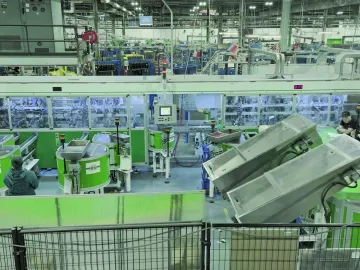
This article details how Schneider Electric transformed waste heat into a reliable energy source at its Lincoln, Nebraska facility. By repurposing low-temperature process cooling water and optimizing building pressurization and controls, the plant significantly reduced natural gas use, water consumption and CO2 emissions while improving indoor comfort and air quality. The project demonstrates how an efficiency-first approach—leveraging existing infrastructure, advanced controls and digital analytics—can deliver measurable sustainability gains and create a scalable pathway toward full electrification and net-zero operations.

Johnson Controls Optimizes Chiller Lift for Energy Efficiency and Heat Recovery

Optimizing chiller lift is critical for improving energy efficiency, enabling heat recovery and meeting higher-temperature heat rejection demands in modern facilities. This article explain how advanced centrifugal compressor designs, variable speed drives and variable geometry diffusers enhance lift control while reducing power consumption. As heat pump applications and water constraints drive demand for higher lift performance, next-generation chiller technologies are redefining efficiency across commercial and industrial cooling systems.

Heat Pump Chillers Deliver Energy Efficiency and Savings

Advancements in heat pump chiller technology now enable efficient recovery of low-grade waste heat, expanding applicability beyond the temperature limitations of traditional absorption systems. When integrated with AI-driven CUP optimization platforms, these systems enhance thermal efficiency, stabilize process loads, and improve overall plant performance.

Inside the 55 Water Street Heat Recovery Transformation

How do you fundamentally transform the utility carbon make-up of a fully occupied, 53-story skyscraper without disrupting the high-profile tenants who depend on its seamless operation? The answer, it turned out, was not just to replace old equipment, but to completely reimagine how the building uses and reuses energy.

Heat Pump Basics

Heat pumps have found growing popularity as a high-efficiency solution for cooling and heating. With greater public awareness and organizational emphasis on sustainability, these systems are a viable upgrade to a wide range of processes, from residential climate control to industrial heating and cooling applications. The flexible functionality of heat pumps – namely their ability to reverse the traditional vapor-compression cycle – offers them significant advantages over refrigerant and combustion-based systems.

Heat Recovery in Chillers and Their Link to Decarbonization Goals

The electrification of heating presents a significant opportunity to achieve decarbonization goals by reducing or eliminating the use of fossil fuels in traditional building systems such as boilers. The current geopolitical scenario has caused commodity prices to quickly rise and forced businesses, cities and countries to rethink their future dependance on fossil fuels and accelerate the conversion to sustainable alternatives.

Full Heat Recovery Engagement: Using Current Technology to Electrify Heating Loads

Reducing fossil fuel use is key to meeting the dual goal of carbon and energy cost reduction. A Full Heat Recovery Engagement (FHRE) approach can dramatically reduce both, through applying simple principles and using existing technology. Simple measures can help focus the design of both the buildings served and the systems used to achieve these goals.

StudioJAED Designs Chilled-Beam Heat-Recovery Advanced-Efficiency HVAC System

Opened in fall 2018, the new $19.3 million school building spans 65,837 square feet with a capacity to serve 500 students. The building serves students of pre-school age through Grade Five and is also designed to host groups of various sizes during summer months. It also serves as the campus gateway to the adjacent Elkton Public Library and the Elkton Middle and High Schools.

Busting Four Myths About Absorption Cooling

Absorption chillers have been around for more than 75 years, with several thousand chillers operating successfully all over the world today. Yet myths about cost, operation and performance surround this technology, particularly in North America. Look beyond the myths and you’ll discover absorption cooling technology can be efficient, cost-effective, flexible and reliable.

Ball Corporation Engineers a Reduction in Cooling Tower Load

If you enjoy the occasional beverage from an aluminum can, there’s a decent chance the can was made by Ball Corporation, a container manufacturing giant with facilities across the world. The company’s facility in Saratoga Springs, New York, services beverage companies throughout the northeastern United States. The plant operates four production lines producing millions of aluminum cans per day.

Using 4 Waste Heat Sources for HVAC Optimization

Heat recovery opportunities have resulted in the largest amount of savings of our common projects our industrial energy management teams have implemented.  It is not the easiest type of project to implement but the amount of savings and the reduction of emissions makes this project very worthwhile.

Nestlé Beats the Heat: Innovative Air-to-Water Heat Exchanger Recovers Heat from Air-Cooled Compressors

When the topic of discussion is making ice cream, the first thing that comes to mind isn’t heat, but at Nestlé’s Ice Cream factory in Tulare, California, heat is recovered from air-cooled air compressors to heat process water. “Right out of the gate, everything is pneumatic,” explains Tom Finn, Project Engineer with Nestlé Ice Cream Division. “Air cylinders and air driven motors, the process piping valves which divert, route, stop/start, and mix process fluids, our packaging machinery including rejection, cleaning and vapor removal processes, all of these rely on compressed air.

A Compressed Air & Gas Institute Q&A Session - Heat Recovery from Industrial Compressed Air Systems

The rise in energy prices is an unwelcome reality in today’s manufacturing and business environment. And while the rate of price increases for natural gas, heating oil and electricity may vary from year to year, the upward trajectory is clear. Energy cost reduction strategies are vital to staying competitive. Compressed Air Best Practices® Magazine recently discussed heat recovery, from industrial compressed air systems, with the Compressed Air and Gas Institute’s (CAGI) Technical Director, Rick Stasyshan and with CAGI member – Werner Rauer of Kaeser Compressor. Their inputs should provide you with some insight in energy-saving technology.

Air Compressor Heat Recovery

When compressed air is generated, heat is inevitably produced as a by-product. Anyone looking to enhance efficiency can use this heat and increase the efficiency of compressors to about 95 percent as a result. To achieve this, there are easy-fit heat exchangers which can be fitted to existing air compressor stations. This investment often pays for itself within less than a year.  

Heat Recovery and Compressed Air Systems

Its simple physics that compressing air gives off heat. The heat energy is concentrated in the decreasing volume of air. To maintain proper operating temperatures, the compressor must transfer excess heat to a cooling media before the air goes out into the pipe system. As much as 90 percent of that heat can be recovered for use in your operation. If you can supplement or replace the electricity, gas or oil needed to create hot water for washrooms, or direct warm air into a workspace, warehouse, loading dock, or entryway, the savings can really add up.

Sustainability Projects: HVAC Optimization

Reducing energy costs and pollution emissions involves many areas within an industrial facility.  My studies have found key (or common) areas where low cost practical projects can be implemented.  Combined, these projects provide savings exceeding 10% of the annual energy spend with an average payback of less than one year.