
Refrigerant Regulations Overview
Few technologies are as vital as refrigeration and air conditioning in today’s society. These systems underpin modern life, ensuring food safety, comfort at home and at work and cooling for industrial processes. For decades, refrigeration and air conditioning have relied on refrigerants that contribute significantly to climate change and ozone depletion. As a result, a global refrigerant transition is underway, shifting the cooling industry away from high-global warming potential (GWP) substances to environmentally friendlier alternatives. This transition, driven by international agreements, evolving technologies and regulatory mandates, marks one of the most impactful environmental efforts in industrial history.
The Regulatory Landscape for Refrigerants
Historically, substances like chlorofluorocarbons (CFCs) and hydrochlorofluorocarbons (HCFCs) were widely used in cooling because of their chemical stability, efficiency and non-flammability. However, CFCs and HCFCs were found to be potent ozone-depleting substances (ODS) once released into the atmosphere, so regulations were enacted to transition the cooling industry toward greener alternatives. The 1987 Montreal Protocol was a turning point, mandating a global phaseout of CFCs and, later, HCFCs. In their place, hydrofluorocarbons (HFCs) were introduced. These are compounds that do not deplete the ozone layer but have a high GWP.
As climate science advanced, attention turned to the GWP of HFCs. Although they’re ozone-safe, their emissions significantly contribute to global warming. Several regulatory bodies are driving the refrigerant transition away from HFCs, with the Kigali Amendment to the Montreal Protocol, signed in 2016, as the centerpiece of the global commitment.
In the United States, the American Innovation and Manufacturing (AIM) Act, passed in 2020, empowers the Environmental Protection Agency (EPA) to phase down HFCs through quotas on production and consumption, with the goal of a 40% reduction by 2024 and an 85% reduction by 2036. Individual states, as well as those in the California Air Resources Board (CARB) Alliance, have also proposed or enacted their own GWP restrictions and timing, which vary by application and equipment type. In the European Union, the F-Gas regulation is similarly ambitious, tightening controls on high-GWP refrigerants and promoting low-GWP alternatives.
Low-GWP Refrigerant Alternatives
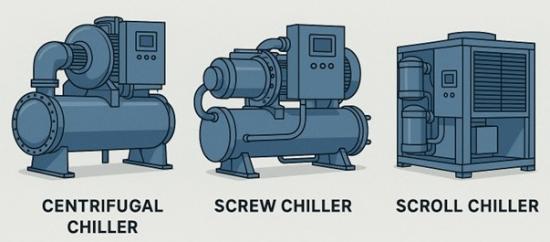
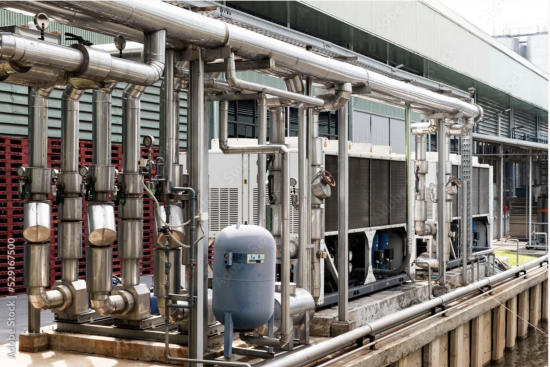
Chillers play a critical role in this GWP reduction as they are essential equipment in many different applications. Types include centrifugal, screw and scroll compressor chillers. These chillers employ refrigerants that are most suitable to their operating ranges, while also complying with regulatory requirements for energy efficiency and GWP limits. In the U.S., the EPA GWP reduction to refrigerants with a GWP of under 700 was completed in 2025 for most comfort cooling and heating chillers. In 2027, this reduction will also be enforced for equipment used in data centers.
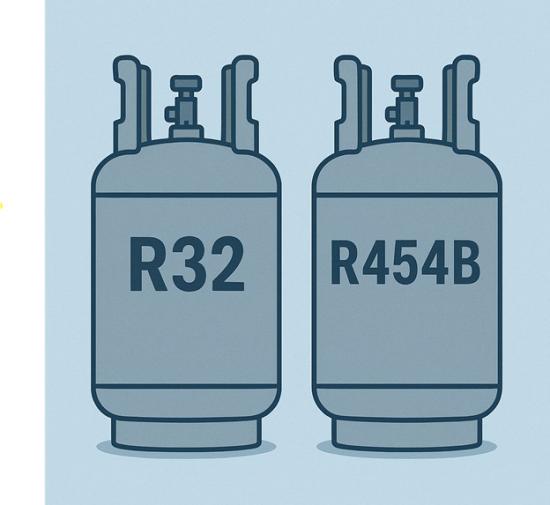
Depending on the chiller type, R-32 (GWP 675) and R-454B (GWP 467) were chosen for the majority of the rotary scroll chiller equipment that traditionally used R-410A (GWP 2088). R-454B is a zeotropic blend composed of R-32 (68.9%) and R-1234yf (31.1%), while R-32 is considered a pure fluid as it’s not blended with other refrigerants in its composition. Many manufacturers chose to transition from R-410A to R-454B as its system performance and capacity are almost identical. This facilitated the transition by requiring fewer design changes.
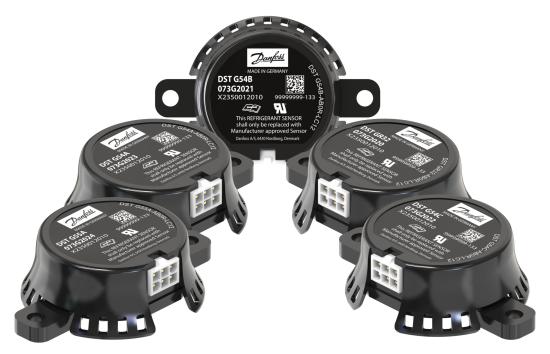
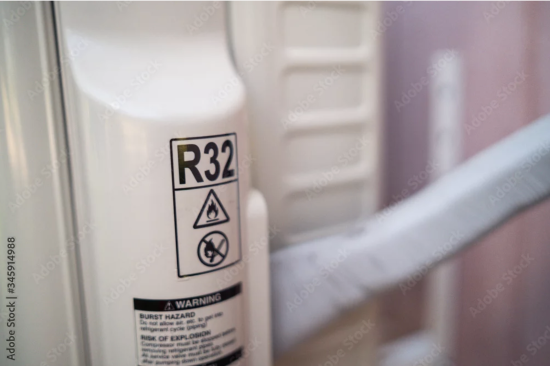
Equipment using R-32 required more extensive redesign but also offered the potential to optimize the cooling system by taking advantage of R-32’s higher efficiency and capacity compared to R-410A. Both R-32 and R-454B are ASHRAE Class A2L refrigerants that are mildly flammable and may require additional safety features such as leak detection and mitigation systems to be integrated into equipment and building design. A2L leak detection sensors play a critical role in detecting leaks and taking action to mitigate potential hazards. They’re an essential part of HVAC/R systems using A2L refrigerants.
In the future, as GWP limits are further decreased, either globally, federally or on a state-by-state basis, manufacturers will need to consider other alternative refrigerants for these applications. New York recently set new sub-20 GWP limits that could go into effect as early as 2030 to 2034, depending on the chiller type and whether or not it’s used as a heat pump. A sub-20 GWP requirement greatly limits the refrigerant options manufacturers can consider for future designs, underscoring the impact natural refrigerants could play in future equipment design.
Making the Refrigerant Transition: Planning Ahead
Currently, there’s no ideal replacement that is a drop-in substitute for R-32 or R-454B. All commercially available refrigerants will require a system redesign. The decision on which future refrigerant to select will also depend on future GWP limits. If the requirement is a sub-150 GWP, then R-454C could be an option as it has a GWP of 148. R-454C is also an A2L refrigerant, but it also has moderate temperature glide due to its composition. This makes system design more complex to optimize.
In Europe, rotary scroll chiller manufacturers are choosing R-454C as either an interim refrigerant or when R-290 cannot be used due to refrigerant charge limitations or safety reasons. R-290 is an ASHRAE Class A3 refrigerant, which means it is highly flammable, so codes and standards need to be updated to allow it to be used safely. It is also a natural refrigerant, so it has no negative impact on the environment. Its strong thermodynamic properties make it an excellent choice for rotary scroll chiller operation in both cooling and heating modes.
Centrifugal and rotary screw chillers are transitioning from R-134a (GWP 1430) and other low-pressure refrigerants to alternatives including R-513A (GWP 573), R-515B (GWP 293), R-1234ze (GWP 7) and R-1233zd (GWP 1). R-513A and R-515B are popular choices as both refrigerants are ASHRAE Class A1 and are not flammable. As such, they don’t require the additional safety features that are needed with A2L or A3 refrigerants.
If future GWP limits are decreased to under 150 GWP, then both of these refrigerants will no longer be allowed for use in new equipment. R-1234ze is also a popular choice since it’s an A2L refrigerant with a low GWP. It has a relatively high boiling point which makes it not suitable for air-to-water chillers used for heating in cold ambient temperatures where the evaporating temperature is low. For high-temperature heat pump applications (including boiler replacements and industrial process heating), R-1234ze is also a good choice. R-600a is a good choice, as well, since it’s a natural refrigerant, but it's class A3.
Another consideration that may have implications for future refrigerant transitions is the impact of PFAS (perfluoroalkyl and polyfluoroalkyl substances) regulations. PFAS, often called “forever chemicals,” do not degrade in the environment. TFA (Trifluoroacetic) is a breakdown product of many PFAS and is considered a contaminant that’s potentially harmful to humans and other life. There is, however, an ongoing debate on the actual definition of PFAS and whether or not refrigerants should be included. This is also made more complex by the varying definitions and interpretations used in individual states. California recently proposed Senate Bill 682, initiated by CARB, which would ban or restrict PFAS in commercial and industrial uses, including in refrigerants, as early as 2040. This could restrict the use of refrigerants including R-1234yf and R-454B or others where R-1234yf is a large component of the blend. R-1234yf is believed to degrade nearly completely into TFA, but the overall environmental impact is still under evaluation.
The refrigerant transition is not without growing pains. Equipment manufacturers will need to continue investing heavily in R&D and re-certification processes to meet unit efficiency targets and additional safety considerations for A2L or A3 refrigerants. Technicians will need additional training to safely work on equipment with new refrigerants, particularly those that are flammable or require specialized procedures. Supply chains will need to adapt to new materials, refrigerant cylinders and safety protocols. Equipment designed for new refrigerants may also have higher upfront costs as refrigerant prices increase from current levels and incorporate the cost of leak detection and mitigation. The regulatory landscape will continue to evolve as new requirements are developed and enforced locally and federally. Energy efficiency, environmental safety and sustainability will continue to be top priorities as the HVAC/R industry adapts to new developments.
Choosing Low-GWP Cooling ProductsThere are many factors to consider when choosing which low-GWP refrigerant to adopt. Your current system, application, ease of retrofit and the logistics of your facility and human resources all should be taken into account.
|
About the Author

Nick Mislak is the Regional Segment Marketing Director for HVAC at Danfoss. He holds Bachelor’s and Master’s Degrees in Mechanical Engineering and has over 15 years of experience in HVAC engineering and product management.
About Danfoss
Danfoss engineers solutions that increase machine productivity, lower energy consumption, enable electrification and reduce emissions. Its innovative engineering dates back to 1933. Danfoss is family-owned and employs over 39,000 people. It serves customers in more than 100 countries with a global footprint of around 100 factories. For more information, visit https://www.danfoss.us.
For similar articles on Refrigeration Compressors, please visit https://coolingbestpractices.com/technology/refrigeration-compressors.
Visit our Webinar Archives to listen to expert presentations on Refrigeration Compressors at https://coolingbestpractices.com/magazine/webinars.
