System Assessments
As the Best Practices Magazines celebrate their twentieth anniversary, we wanted to take a moment to reflect on the remarkable system efficiency gains achieved since our first issue. We also wanted to give subscribers a peek at what the next decades might bring. To do this, we asked a hand-selected list of original equipment manufacturers, independent compressed air system sales and service companies, manufacturing plants and independent system auditors to share their thoughts, highlighting the changes they’ve seen over the past 20 years, then predicting what the next 20 years will bring.
Heat recovery opportunities have resulted in the largest amount of savings of our common projects our industrial energy management teams have implemented. It is not the easiest type of project to implement but the amount of savings and the reduction of emissions makes this project very worthwhile.
[ Read Full Story ]
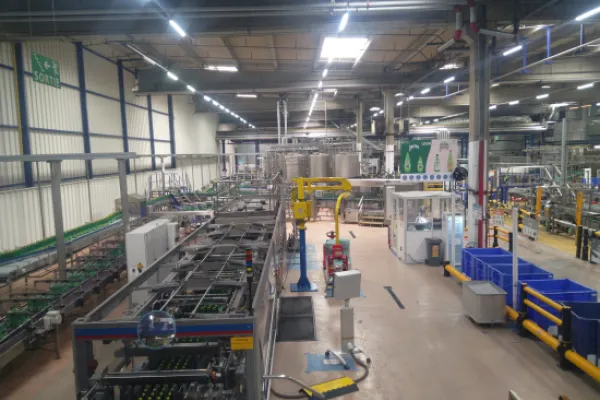
When the topic of discussion is making ice cream, the first thing that comes to mind isn’t heat, but at Nestlé’s Ice Cream factory in Tulare, California, heat is recovered from air-cooled air compressors to heat process water.
“Right out of the gate, everything is pneumatic,” explains Tom Finn, Project Engineer with Nestlé Ice Cream Division. “Air cylinders and air driven motors, the process piping valves which divert, route, stop/start, and mix process fluids, our packaging machinery including rejection, cleaning and vapor removal processes, all of these rely on compressed air.
[ Read Full Story ]
There are several pieces of information that your cooling system specialist will need in order to properly engineer and build a cooling system for your new air compressor. There are many types of air compressors and each has different requirements of the cooling system in order to operate correctly. This article will take the mystery out of some of the terms and specifications for your cooling system.
[ Read Full Story ]
The rise in energy prices is an unwelcome reality in today’s manufacturing and business environment. And while the rate of price increases for natural gas, heating oil and electricity may vary from year to year, the upward trajectory is clear. Energy cost reduction strategies are vital to staying competitive. Compressed Air Best Practices® Magazine recently discussed heat recovery, from industrial compressed air systems, with the Compressed Air and Gas Institute’s (CAGI) Technical Director, Rick Stasyshan and with CAGI member – Werner Rauer of Kaeser Compressor. Their inputs should provide you with some insight in energy-saving technology.
[ Read Full Story ]
When compressed air is generated, heat is inevitably produced as a by-product. Anyone looking to enhance efficiency can use this heat and increase the efficiency of compressors to about 95 percent as a result. To achieve this, there are easy-fit heat exchangers which can be fitted to existing air compressor stations. This investment often pays for itself within less than a year.
[ Read Full Story ]
There are six basic types of cooling systems that you can choose from to meet the cooling needs of your load. Each one has its strengths and weaknesses. This article was written to identify the different types of cooling systems and identify their strengths and weaknesses so that you can make an informed choice based on your needs.
[ Read Full Story ]
Temperature control of the musts during the fermentation process is required for the production of high quality wines. Alcoholic fermentation is the chemical reaction in which yeast is used to transform the natural sugars of the fruit into alcohol. The heat generated by this exothermic reaction has to be managed. If must temperatures are allowed to reach the 85°F to 105°F range the reaction will be stopped. This results in high sugar content and an unstable product that requires the addition of sulphur dioxide (SO2) to allow it to be stored without spoiling. In general, optimal fermentation temperatures are 65°F - 68°F for white wines and 77°F for red wines.
[ Read Full Story ]
Its simple physics that compressing air gives off heat. The heat energy is concentrated in the decreasing volume of air. To maintain proper operating temperatures, the compressor must transfer excess heat to a cooling media before the air goes out into the pipe system. As much as 90 percent of that heat can be recovered for use in your operation. If you can supplement or replace the electricity, gas or oil needed to create hot water for washrooms, or direct warm air into a workspace, warehouse, loading dock, or entryway, the savings can really add up.
[ Read Full Story ]
Industrial plants are major consumers of water. Water is used in many processes. Sustainability projects focus on reducing the consumption of water and the energy-costs associated with cooling water so it may be effectively used.
[ Read Full Story ]
It is widely recognized that compressed air systems account for ten percent of all electricity and roughly sixteen percent of U.S. industrial motor system energy use. Seventy percent of all manufacturing facilities in the United States use compressed air to drive a variety of process equipment.
[ Read Full Story ]
Pagination
CHILLERS
Chiller & Cooling Best Practices sat down with three of CIS’s officers, Mikel Bonano, Jr., CEO; Keith Earhart, Vice President, Engineered Sales and Strategic Accounts and Joseph Bonano, Louisiana Controls Manager; to discuss staying operational during extreme weather events, the benefits of two-stage centrifugal chiller impellers and a massive project CIS undertook for Tulane University.
EVAPORATIVE COOLING
How often do you think about your cooling tower or the fill that provides the cooling engine for your process? Unfortunately, if you’re like many plant operators, your cooling tower is but one piece of equipment in your large facility, and its ranking on your priority list is probably lower than many other expensive and more intricate pieces of equipment in your plant.
HEAT RECOVERY
This article details how Schneider Electric transformed waste heat into a reliable energy source at its Lincoln, Nebraska facility. By repurposing low-temperature process cooling water and optimizing building pressurization and controls, the plant significantly reduced natural gas use, water consumption and CO2 emissions while improving indoor comfort and air quality. The project demonstrates how an efficiency-first approach—leveraging existing infrastructure, advanced controls and digital analytics—can deliver measurable sustainability gains and create a scalable pathway toward full electrification and net-zero operations.
FREE-COOLING
Free cooling is a type of process cooling system design that takes advantage of ambient temperatures to reduce or even eliminate chiller operation. Chillers consume large amounts of energy; so, reducing a chiller’s operating hours per year can result in significant bottom line savings for your company. In this article, we will review a typical free cooling system design, some of the considerations for your system, and finally, how these considerations impact your system’s ability to capitalize on the free cooling operation.
COOLING CONTROLS
A building materials manufacturer solved persistent dust buildup by using a custom chiller designed to operate below the ambient dew point, intentionally creating condensation on process equipment. This case study shows how Delta T Systems integrated ambient dew point sensors and variable speed drive (VSD) technology to optimize chilled water temperature, reduce cleanup time, and improve energy efficiency. The solution delivered measurable maintenance savings and became a scalable model for process cooling and chiller optimization across multiple facilities.
WATER SAVINGS
As facility managers, industrial engineers and procurement professionals strive to meet rising demands for energy efficiency, water conservation and sustainability, cooling systems have taken center stage. Among the various technologies reshaping the industrial and commercial cooling landscape, adiabatic cooling stands out as a compelling alternative to traditional methods.
This article explores the evolving role of adiabatic cooling, its technical advantages and why it's gaining traction across industries.