Industries
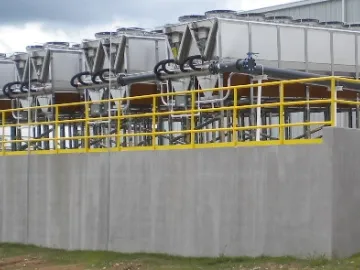
Adiabatic coolers are rapidly gaining ground in plastics processing as manufacturers seek sustainable, energy-efficient alternatives to traditional cooling towers. By operating in dry, adiabatic and free-cooling modes, modern systems engineered by Frigel North America deliver up to 90% water savings, lower energy consumption and improved temperature stability for injection molding, PET, extrusion and thermoforming applications. With reduced maintenance, closed-loop protection and long-term ROI advantages, adiabatic cooling is emerging as the new benchmark for high-performance industrial process cooling.
Heat recovery opportunities have resulted in the largest amount of savings of our common projects our industrial energy management teams have implemented. It is not the easiest type of project to implement but the amount of savings and the reduction of emissions makes this project very worthwhile.
[ Read Full Story ]
Market demand for plastics machinery continued to grow in the third quarter of 2014, according to statistics compiled and reported by SPI: the Plastics Industry Trade Association’s Committee on Equipment Statistics (CES).
[ Read Full Story ]
When the topic of discussion is making ice cream, the first thing that comes to mind isn’t heat, but at Nestlé’s Ice Cream factory in Tulare, California, heat is recovered from air-cooled air compressors to heat process water.
“Right out of the gate, everything is pneumatic,” explains Tom Finn, Project Engineer with Nestlé Ice Cream Division. “Air cylinders and air driven motors, the process piping valves which divert, route, stop/start, and mix process fluids, our packaging machinery including rejection, cleaning and vapor removal processes, all of these rely on compressed air.
[ Read Full Story ]
Chiller & Cooling Best Practices interviewed Michael Jones, Corporate Energy Team Leader, from Intertape Polymer Group (IPG).
Intertape Polymer Group (IPG) is a manufacturer of tapes, films, woven fabrics, and complementary packaging systems for industrial and consumer use. The company operates 10 production plants and employs approximately 1,800 people. IPG has developed a robust energy management program by using ENERGY STAR energy management tools and actively participating in the ENERGY STAR partnership. IPG is receiving ENERGY STAR recognition for the growth of its energy program and leadership as a medium-sized manufacturer.
[ Read Full Story ]
There are three main segments in Visteon's climate group are climate systems, powertrain cooling and engine induction. Climate systems include refrigeration compressors, fluid transport, heat exchangers, battery cooling modules, climate controls, auto defog/demist systems, and multi-zone HVAC systems. Powertrain cooling systems include heat exchangers (radiators, condensers, charge-air, exhaust-gas), airflow management, and diesel and hybrid thermal management. Engine induction includes air induction systems and intake manifolds.
[ Read Full Story ]
Temperature control of the musts during the fermentation process is required for the production of high quality wines. Alcoholic fermentation is the chemical reaction in which yeast is used to transform the natural sugars of the fruit into alcohol. The heat generated by this exothermic reaction has to be managed. If must temperatures are allowed to reach the 85°F to 105°F range the reaction will be stopped. This results in high sugar content and an unstable product that requires the addition of sulphur dioxide (SO2) to allow it to be stored without spoiling. In general, optimal fermentation temperatures are 65°F - 68°F for white wines and 77°F for red wines.
[ Read Full Story ]
Temperature control of the musts during the fermentation process is required for the production of high quality wines. Alcoholic fermentation is the chemical reaction in which yeast is used to transform the natural sugars of the fruit into alcohol. The heat generated by this exothermic reaction has to be managed. If must temperatures are allowed to reach the 85°F to 105°F range the reaction will be stopped. This results in high sugar content and an unstable product that requires the addition of sulphur dioxide (SO2) to allow it to be stored without spoiling. In general, optimal fermentation temperatures are 65°F - 68°F for white wines and 77°F for red wines.
[ Read Full Story ]
Industrial plants are major consumers of water. Water is used in many processes. Sustainability projects focus on reducing the consumption of water and the energy-costs associated with cooling water so it may be effectively used.
[ Read Full Story ]
This article reviews two major processes in paper mills: compressed air quality and air compressor cooling. The central air compressor room was expanded and relocated at the largest privately owned paper mill in Canada. The compressor space was required by a plant expansion, which would occupy the original compressor space for increased production.
[ Read Full Story ]
Current ventilation guidelines recommend maintaining ventilation with 100% outdoor air 24/7, or as much as possible if that is not feasible, as an effective way to keep airborne pathogen concentration under control. Obviously, outdoor air needs to be filtered and conditioned to guarantee the indoor temperature and humidity set points; this, in turn, implies a higher HVAC-related primary energy consumption, because more outdoor air needs to be conditioned compared to the pre-COVID-19 situation, when the flow of outdoor air was typically 20% of the total supply air entering the space.
[ Read Full Story ]
Pagination
Food
Bayer Crop Science runs a 240-acre fertilizer production facility with areas for active ingredient and chemical intermediate production, as well as a high-active herbicide production unit. Among the multiple cooling towers at the facility was a 40-year-old field-erected, three-cell, wooden, crossflow Marley cooling tower used for rejecting heat and providing cooling for multiple processes.
Beverage
Faced with the requirement for improved cooling, a blow molding plant chose to invest in a significant redesign of its cooling systems that combined two separate systems into a single, integrated system. The combined design leveraged the components to provide a more controlled, efficient system while also requiring less space than the alternative would have needed.
HVAC
Current ventilation guidelines recommend maintaining ventilation with 100% outdoor air 24/7, or as much as possible if that is not feasible, as an effective way to keep airborne pathogen concentration under control. Obviously, outdoor air needs to be filtered and conditioned to guarantee the indoor temperature and humidity set points; this, in turn, implies a higher HVAC-related primary energy consumption, because more outdoor air needs to be conditioned compared to the pre-COVID-19 situation, when the flow of outdoor air was typically 20% of the total supply air entering the space.
Welding
Metalworking
In this article:
Cooling for High-Speed Injection Plastic Molding
Free Cooling Results in Massive Energy Savings
Heat Treating Processes Require Cooling to Prevent Furnace Overheating
Food Processing Cooling Needs Vary by the Specific Process
Chemical Plants Need Ultra-Cold Conditions
Medical
Like many universities across America, The University of Cincinnati had a major challenge having to operate aging central utility plants with older technology, reduced efficiencies and capacities, with chilled water equipment at the end of its service life. Even so, UC needed to maintain plant operations under diverse load conditions, including critical hospital utility demands that are currently expanding and in daily periods subject to energy tariff.
Manufacturing
This article details how Schneider Electric transformed waste heat into a reliable energy source at its Lincoln, Nebraska facility. By repurposing low-temperature process cooling water and optimizing building pressurization and controls, the plant significantly reduced natural gas use, water consumption and CO2 emissions while improving indoor comfort and air quality. The project demonstrates how an efficiency-first approach—leveraging existing infrastructure, advanced controls and digital analytics—can deliver measurable sustainability gains and create a scalable pathway toward full electrification and net-zero operations.
Plastics and Rubber
An automotive fabric products manufacturer, reduced natural gas consumption and carbon emissions by implementing a water source heat pump system that captures waste heat from process cooling operations and converts it into usable heating energy for a large makeup air unit. The project simultaneously lowers cooling demand on the facility’s chilled water plant, demonstrating how industrial manufacturers can leverage heat recovery and electrification technologies to improve energy efficiency and support decarbonization goals.