Industrial Utility Efficiency

Technology

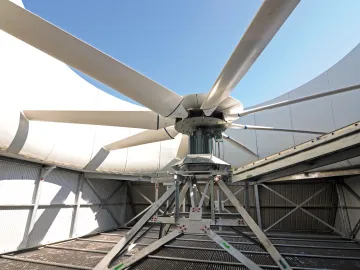
Across industries, operators are adopting cooling tower direct drive (CTDD) motor technology. In particular, permanent magnet (PM) direct drive motors are delivering measurable improvements in efficiency, cleanliness and maintenance reduction. The change is more than a component swap; it represents a new approach to cooling tower design that reduces operating costs, supports environmental goals and improves reliability. 

Industrial plants are major consumers of water. Water is used in many processes. Sustainability projects focus on reducing the consumption of water and the energy-costs associated with cooling water so it may be effectively used.
This article reviews two major processes in paper mills: compressed air quality and air compressor cooling.  The central air compressor room was expanded and relocated at the largest privately owned paper mill in Canada.  The compressor space was required by a plant expansion, which would occupy the original compressor space for increased production.
This paper presents a discussion on the topic of Electric Demand Management as it relates to electric tariff rates, new power generation, and incentives to curtail peak usage.
It is widely recognized that compressed air systems account for ten percent of all electricity and roughly sixteen percent of U.S. industrial motor system energy use. Seventy percent of all manufacturing facilities in the United States use compressed air to drive a variety of process equipment.
Reducing energy costs and pollution emissions involves many areas within an industrial facility.  My studies have found a four key (or common) areas where low cost practical projects can be implemented.  Combined, these projects provide savings exceeding 10% of the annual energy spend with an average payback of less than one year.
Reducing energy costs and pollution emissions involves many areas within an industrial facility.  My studies have found key (or common) areas where low cost practical projects can be implemented.  Combined, these projects provide savings exceeding 10% of the annual energy spend with an average payback of less than one year.

Chillers

This article will make plants aware of the energy and water use differential between CHW systems…

Cooling Towers

Bayer Crop Science runs a 240-acre fertilizer production facility with areas for active ingredient…

Fluid Coolers

This article explores how air-cooled heat rejection systems are reshaping industrial cooling…

Dry Coolers

Adiabatic coolers are rapidly gaining ground in plastics processing as manufacturers seek…

Water Filtration

Field-erected evaporative “wet” cooling towers, combined with heat exchangers, are an economical…

Heat Exchangers

Free cooling offers a highly efficient alternative to chiller-based cooling, but its success…

Cooling Controls

The customers wanted to be able to monitor their system from a control room. They wanted to be able…