Industrial Utility Efficiency

Technology

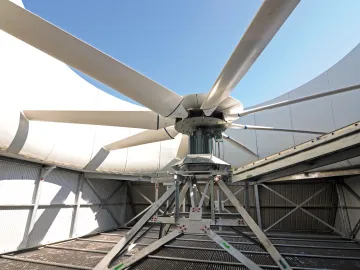
Across industries, operators are adopting cooling tower direct drive (CTDD) motor technology. In particular, permanent magnet (PM) direct drive motors are delivering measurable improvements in efficiency, cleanliness and maintenance reduction. The change is more than a component swap; it represents a new approach to cooling tower design that reduces operating costs, supports environmental goals and improves reliability. 

There are six basic types of cooling systems that you can choose from to meet the cooling needs of your load. Each one has its strengths and weaknesses. This article was written to identify the different types of cooling systems and identify their strengths and weaknesses so that you can make an informed choice based on your needs.
Compressed air systems are present in almost all industrial processes and facilities. They have been correctly identified as an area of opportunity to reduce electrical (kW) energy costs through measures like reducing compressed air leaks and identifying artificial demand and inappropriate uses. Water-cooled air compressors can also be significant consumers of water and reducing these costs can represent a second area of opportunity.
Temperature control of the musts during the fermentation process is required for the production of high quality wines. Alcoholic fermentation is the chemical reaction in which yeast is used to transform the natural sugars of the fruit into alcohol. The heat generated by this exothermic reaction has to be managed. If must temperatures are allowed to reach the 85°F to 105°F range the reaction will be stopped. This results in high sugar content and an unstable product that requires the addition of sulphur dioxide (SO2) to allow it to be stored without spoiling. In general, optimal fermentation temperatures are 65°F - 68°F for white wines and 77°F for red wines.
Its simple physics that compressing air gives off heat. The heat energy is concentrated in the decreasing volume of air. To maintain proper operating temperatures, the compressor must transfer excess heat to a cooling media before the air goes out into the pipe system. As much as 90 percent of that heat can be recovered for use in your operation. If you can supplement or replace the electricity, gas or oil needed to create hot water for washrooms, or direct warm air into a workspace, warehouse, loading dock, or entryway, the savings can really add up.

Chillers

This article will make plants aware of the energy and water use differential between CHW systems…

Cooling Towers

Bayer Crop Science runs a 240-acre fertilizer production facility with areas for active ingredient…

Fluid Coolers

This article explores how air-cooled heat rejection systems are reshaping industrial cooling…

Dry Coolers

Adiabatic coolers are rapidly gaining ground in plastics processing as manufacturers seek…

Water Filtration

Field-erected evaporative “wet” cooling towers, combined with heat exchangers, are an economical…

Heat Exchangers

Free cooling offers a highly efficient alternative to chiller-based cooling, but its success…

Cooling Controls

The customers wanted to be able to monitor their system from a control room. They wanted to be able…