Industrial Utility Efficiency

Technology

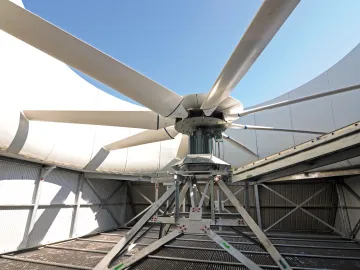
Across industries, operators are adopting cooling tower direct drive (CTDD) motor technology. In particular, permanent magnet (PM) direct drive motors are delivering measurable improvements in efficiency, cleanliness and maintenance reduction. The change is more than a component swap; it represents a new approach to cooling tower design that reduces operating costs, supports environmental goals and improves reliability. 

When the topic of discussion is making ice cream, the first thing that comes to mind isn’t heat, but at Nestlé’s Ice Cream factory in Tulare, California, heat is recovered from air-cooled air compressors to heat process water. “Right out of the gate, everything is pneumatic,” explains Tom Finn, Project Engineer with Nestlé Ice Cream Division. “Air cylinders and air driven motors, the process piping valves which divert, route, stop/start, and mix process fluids, our packaging machinery including rejection, cleaning and vapor removal processes, all of these rely on compressed air.
As the population continues to grow in the United States, industrial water use will need to continue to fall to help offset the increases in public-supply water use. Water-cooled compressed air systems provide an opportunity for sustainability managers to reduce associated cooling water consumption and costs. If switching to air-cooled air compressors is not possible, understanding the costs and the alternative types of liquid cooling systems is important.
There are several pieces of information that your cooling system specialist will need in order to properly engineer and build a cooling system for your new air compressor. There are many types of air compressors and each has different requirements of the cooling system in order to operate correctly. This article will take the mystery out of some of the terms and specifications for your cooling system.
The rise in energy prices is an unwelcome reality in today’s manufacturing and business environment. And while the rate of price increases for natural gas, heating oil and electricity may vary from year to year, the upward trajectory is clear. Energy cost reduction strategies are vital to staying competitive. Compressed Air Best Practices® Magazine recently discussed heat recovery, from industrial compressed air systems, with the Compressed Air and Gas Institute’s (CAGI) Technical Director, Rick Stasyshan and with CAGI member – Werner Rauer of Kaeser Compressor. Their inputs should provide you with some insight in energy-saving technology.
When compressed air is generated, heat is inevitably produced as a by-product. Anyone looking to enhance efficiency can use this heat and increase the efficiency of compressors to about 95 percent as a result. To achieve this, there are easy-fit heat exchangers which can be fitted to existing air compressor stations. This investment often pays for itself within less than a year.  
There are six basic types of cooling systems that you can choose from to meet the cooling needs of your load. Each one has its strengths and weaknesses. This article was written to identify the different types of cooling systems and identify their strengths and weaknesses so that you can make an informed choice based on your needs.

Chillers

This article will make plants aware of the energy and water use differential between CHW systems…

Cooling Towers

Bayer Crop Science runs a 240-acre fertilizer production facility with areas for active ingredient…

Fluid Coolers

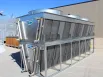
This article explores how air-cooled heat rejection systems are reshaping industrial cooling…

Dry Coolers

Adiabatic coolers are rapidly gaining ground in plastics processing as manufacturers seek…

Water Filtration

Field-erected evaporative “wet” cooling towers, combined with heat exchangers, are an economical…

Heat Exchangers

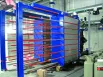
Free cooling offers a highly efficient alternative to chiller-based cooling, but its success…

Cooling Controls

The customers wanted to be able to monitor their system from a control room. They wanted to be able…