
Technology
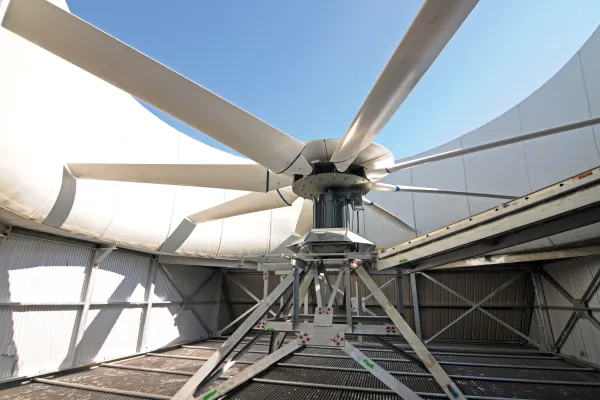
Across industries, operators are adopting cooling tower direct drive (CTDD) motor technology. In particular, permanent magnet (PM) direct drive motors are delivering measurable improvements in efficiency, cleanliness and maintenance reduction. The change is more than a component swap; it represents a new approach to cooling tower design that reduces operating costs, supports environmental goals and improves reliability.
“ASHRAE Guideline 36 is basically a high-performance sequence of operations for large buildings, such as large manufacturing plants, hospitals and hotels. The core concept is to have our load dictate what we do, not the other way around.” — Keith Earhart.
[ Read Full Story ]
Controlling cooling water flow is a critical element of high-performance cooling systems. Fortunately, pressure is a straightforward measurement that can be used as a cost-effective control input for flow control systems. Proper interpretation of pressure readings is required for accurate control at desired rates. This article covers pressure reading methods, control strategies and practical tips.
[ Read Full Story ]
As facility managers, industrial engineers and procurement professionals strive to meet rising demands for energy efficiency, water conservation and sustainability, cooling systems have taken center stage. Among the various technologies reshaping the industrial and commercial cooling landscape, adiabatic cooling stands out as a compelling alternative to traditional methods.
This article explores the evolving role of adiabatic cooling, its technical advantages and why it's gaining traction across industries.
[ Read Full Story ]
Thermal energy storage (TES) is a vital tool for managing energy consumption. By storing thermal energy for later use, TES systems help reduce peak demand on the power grid, lower energy costs and contribute to sustainability goals. This article explores how TES systems work, their economic benefits and their role in supporting a more resilient and sustainable energy infrastructure.
[ Read Full Story ]
This article starts with the fundamentals: a review of bacteria, bacteria test methods and the mechanism of biofilm formation. The second part includes operating protocols, biofilm monitoring methods and Legionella risks.
[ Read Full Story ]
This article starts with the fundamentals: a review of bacteria, bacteria test methods and the mechanism of biofilm formation. The second part includes operating protocols, biofilm monitoring methods and Legionella risks.
[ Read Full Story ]
This article starts with the fundamentals: a review of bacteria, bacteria test methods and the mechanism of biofilm formation. The second part includes operating protocols, biofilm monitoring methods and Legionella risks.
[ Read Full Story ]
The Cordia Minneapolis district energy system has evolved since it first went online in 1972 to include one main plant and nine satellite plants providing heating and cooling to over 100 buildings. Those buildings are some of the biggest in the state, including the homes of three professional sports teams (U.S. Bank Stadium, Target Field and Target Center), the Minneapolis Convention Center, the Minnesota Star Tribune printing plant and Augsburg University. The steam and hot water system includes 39,000 feet of piping. The chilled water system includes 24,900 feet of piping and has a cooling capacity of 37,550 tons.
[ Read Full Story ]
The Cordia Minneapolis district energy system has evolved since it first went online in 1972 to include one main plant and nine satellite plants providing heating and cooling to over 100 buildings. Those buildings are some of the biggest in the state, including the homes of three professional sports teams (U.S. Bank Stadium, Target Field and Target Center), the Minneapolis Convention Center, the Minnesota Star Tribune printing plant and Augsburg University. The steam and hot water system includes 39,000 feet of piping. The chilled water system includes 24,900 feet of piping and has a cooling capacity of 37,550 tons.
[ Read Full Story ]
The average chiller lifecycle can be as much as 20 years making maintenance a continuous process requiring a holistic and proactive approach. By integrating smart equipment engineered to simplify maintenance with intelligent automation solutions, chillers can be optimized to drive building performance and help operators overcome common maintenance challenges.
[ Read Full Story ]