
Technology
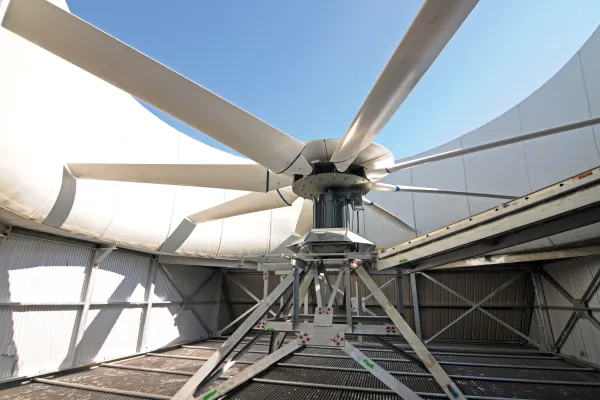
Across industries, operators are adopting cooling tower direct drive (CTDD) motor technology. In particular, permanent magnet (PM) direct drive motors are delivering measurable improvements in efficiency, cleanliness and maintenance reduction. The change is more than a component swap; it represents a new approach to cooling tower design that reduces operating costs, supports environmental goals and improves reliability.
In this article:
Cooling for High-Speed Injection Plastic Molding
Free Cooling Results in Massive Energy Savings
Heat Treating Processes Require Cooling to Prevent Furnace Overheating
Food Processing Cooling Needs Vary by the Specific Process
Chemical Plants Need Ultra-Cold Conditions
[ Read Full Story ]
In this article:
Cooling for High-Speed Injection Plastic Molding
Free Cooling Results in Massive Energy Savings
Heat Treating Processes Require Cooling to Prevent Furnace Overheating
Food Processing Cooling Needs Vary by the Specific Process
Chemical Plants Need Ultra-Cold Conditions
[ Read Full Story ]
The CHS oil refinery in McPherson, KS, is a 550-acre facility that processes 100,000 barrels of crude oil per day, consisting of an even mix of sweet crude oil and sour crude oil. Crude is brought in through pipelines and fractionated into gasoline, diesel and a few other products. The refinery also houses a sulfur plant where it produces a liquid agricultural fertilizer called ATS or ammonium thiosulfate, which uses sulfur removed primarily through a process called hydrotreating.
[ Read Full Story ]
Across industries, operators are adopting cooling tower direct drive (CTDD) motor technology. In particular, permanent magnet (PM) direct drive motors are delivering measurable improvements in efficiency, cleanliness and maintenance reduction. The change is more than a component swap; it represents a new approach to cooling tower design that reduces operating costs, supports environmental goals and improves reliability.
[ Read Full Story ]
How do you fundamentally transform the utility carbon make-up of a fully occupied, 53-story skyscraper without disrupting the high-profile tenants who depend on its seamless operation? The answer, it turned out, was not just to replace old equipment, but to completely reimagine how the building uses and reuses energy.
[ Read Full Story ]
This article breaks down the most critical codes affecting cooling towers, closed-circuit coolers, evaporative condensers and related equipment, explaining why they matter to the professionals responsible for selecting, installing and maintaining them.
[ Read Full Story ]
This article breaks down the most critical codes affecting cooling towers, closed-circuit coolers, evaporative condensers and related equipment, explaining why they matter to the professionals responsible for selecting, installing and maintaining them.
[ Read Full Story ]
The American Innovation and Manufacturing Act, empowers the Environmental Protection Agency (EPA) to phase down HFCs through quotas on production and consumption, with the goal of a 40% reduction by 2024 and an 85% reduction by 2036. Individual states, as well as those in the California Air Resources Board (CARB) Alliance, have also proposed or enacted their own GWP restrictions and timing, which vary by application and equipment type.
[ Read Full Story ]
The American Innovation and Manufacturing Act, empowers the Environmental Protection Agency (EPA) to phase down HFCs through quotas on production and consumption, with the goal of a 40% reduction by 2024 and an 85% reduction by 2036. Individual states, as well as those in the California Air Resources Board (CARB) Alliance, have also proposed or enacted their own GWP restrictions and timing, which vary by application and equipment type.
[ Read Full Story ]
“ASHRAE Guideline 36 is basically a high-performance sequence of operations for large buildings, such as large manufacturing plants, hospitals and hotels. The core concept is to have our load dictate what we do, not the other way around.” — Keith Earhart.
[ Read Full Story ]